Showing posts with label philosophy of perception. Show all posts
Showing posts with label philosophy of perception. Show all posts
10 June 2012
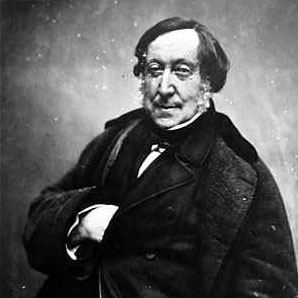
Schopenhauer on Music
"For music everywhere expresses only the quintessence of life and of the events taking place in it, never these themselves, and so distinctions within these do not always influence it. Precisely this universality, exclusive as it is to music, together with the most exact precision gives music its high value as the panacea for all our suffering. Thus if music ties itself too closely to words or tries to model itself on events, it is tryingf to speak a language that is not its own. Nobody has avoided this error as completely as Rossini; which is why his music speaks its own language so clearly and purely that it has no need of words at all and retains its full effect when performed in instruments alone."
That sounds rather equivocal praise for Rossini, who composed for opera, i.e. specifically for words and a stage set, not the concert halls Schopenhauer seems to have in mind here.


03 May 2012
William James Quote
“Why do we thus so markedly select the tangible to be the real? Our motives are not far to seek. The
tangible qualities are the least fluctuating. When we get them at all we get
them the same. The other qualities fluctuate enormously as our relative
position to the object changes. Then, most decisive still, the tactile
properties are those most intimately connected with our weal or woe. A dagger
hurts us only when in contact with our skin….”
Principles of Psychology, chapter 21, The Perception of Reality
17 December 2011
William James Quote of the Day
"[A]lmost all the retinal shapes that objects throw are perspective 'distortions.' Square table-tops constantly present two acute and two obtuse angles; circles drawn on our wallpapers, our carpets, or on sheets of paper, usually show like ellipses; parallels approach as they recede; human bodies are foreshortened; and the transitions from one to another of these altering forms are infinite and continual. Out of the flux, however, one phase always stands prominent., It is the form the object has when we see it easiest and best: and that is when our eyes and the object both are in what may be called the normal position. "
Principles of Psychology, Chapter 20, "The Perception of Space."
Principles of Psychology, Chapter 20, "The Perception of Space."
17 April 2008
Old-School Philosophizing
There is an important opposition in metaphysics between "idealism" one the one hand and "realism" on the other. Also sometimes known as "monism" versus "dualism," for a reason that will soon become obvious.
The best quick way to state this is: an idealist thinks this keyboard I'm looking at right now is identical to my idea of the keyboard. The realist on the other hand, thinks the keyboard itself is a material fact outside of my skull, my idea of it is another sort of fact inside of my skull, so the two can't be the same thing.
Think of dreams to get a fix on the difference. If I'm dreaming right now, then it is fairly plausible to say that this keyboard is my idea of it -- since outside of my skull there will be a pillow and some blankets but probably no keyboard. Although idealists don't precisely believe that all of life is a dream, it is certainly more dream-like in their telling than it is in the telling of most realists.
Now, the realist/idealist dichotomy is one dispute. It's a matter of metaphysics. The rationalist/empiricist dichotomy is another thing. Its a matter of epistemology -- the philosopical study of knowledge, its components and conditions.
The history of philosophy has rationalist realists (like Leibniz). It also has rationalist idealists (like Josiah Royce). It has empiricist idealists (like George Berkeley). And it also has some fillers for the one remaining square in this grid, the empiricist realists (John Locke).
What about Immanuel Kant? His notorious example requires that we expand our grid a bit, because the best quick statement we can make about him is that he was clearly on the rationalist side of the epistemological split, but that he position was ambiguous on the metaphysical split.
He was a rationalist whose rationalism led him to a view of metaphysics that was in part realist and in part idealism.
Most of what we know about life is a dream, though we can also reasonably postulate what we can not prove -- a non-dream element.
The best quick way to state this is: an idealist thinks this keyboard I'm looking at right now is identical to my idea of the keyboard. The realist on the other hand, thinks the keyboard itself is a material fact outside of my skull, my idea of it is another sort of fact inside of my skull, so the two can't be the same thing.
Think of dreams to get a fix on the difference. If I'm dreaming right now, then it is fairly plausible to say that this keyboard is my idea of it -- since outside of my skull there will be a pillow and some blankets but probably no keyboard. Although idealists don't precisely believe that all of life is a dream, it is certainly more dream-like in their telling than it is in the telling of most realists.
Now, the realist/idealist dichotomy is one dispute. It's a matter of metaphysics. The rationalist/empiricist dichotomy is another thing. Its a matter of epistemology -- the philosopical study of knowledge, its components and conditions.
The history of philosophy has rationalist realists (like Leibniz). It also has rationalist idealists (like Josiah Royce). It has empiricist idealists (like George Berkeley). And it also has some fillers for the one remaining square in this grid, the empiricist realists (John Locke).
What about Immanuel Kant? His notorious example requires that we expand our grid a bit, because the best quick statement we can make about him is that he was clearly on the rationalist side of the epistemological split, but that he position was ambiguous on the metaphysical split.
He was a rationalist whose rationalism led him to a view of metaphysics that was in part realist and in part idealism.
Most of what we know about life is a dream, though we can also reasonably postulate what we can not prove -- a non-dream element.
Subscribe to:
Posts (Atom)


