Showing posts with label music. Show all posts
Showing posts with label music. Show all posts
10 June 2012
Schopenhauer on Music
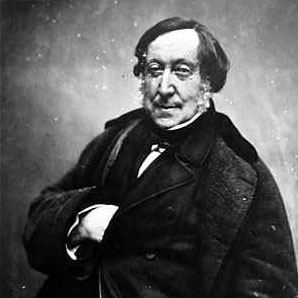
"For music everywhere expresses only the quintessence of life and of the events taking place in it, never these themselves, and so distinctions within these do not always influence it. Precisely this universality, exclusive as it is to music, together with the most exact precision gives music its high value as the panacea for all our suffering. Thus if music ties itself too closely to words or tries to model itself on events, it is tryingf to speak a language that is not its own. Nobody has avoided this error as completely as Rossini; which is why his music speaks its own language so clearly and purely that it has no need of words at all and retains its full effect when performed in instruments alone."
That sounds rather equivocal praise for Rossini, who composed for opera, i.e. specifically for words and a stage set, not the concert halls Schopenhauer seems to have in mind here.


22 August 2010
Terry Teachout's Essay
In this weekend's Wall Street Journal, there is a piece by Terry Teachout concerning Don Rosenberg, and his (failed) lawsuit against his employer, the Cleveland Plain Dealer.
Rosenberg had been the classical-music critic for that paper since 1992. Fromn 2002 forward he was a consistent critic of the conductor of the Cleveland Orchestra, Franz Welser-Most. He wrote things like, "mediocrity takes up residence ... when Weiser-Most is on the platform." Teachout asks, "At what point does so oft-repeated an opinion become predictable and redundant?"
Intriguing sidebar: Terrance Egger, the publisher of the Plain Dealer, sits on the board of the Cleveland Orchestra.
Rosenberg was re-assigned in 2008. His editor, Susan Goldberg, said Rpsenberg had displayed a "closed mind" on the subject and would no longer be reviewing that orchestra's concerts. In Teachout's words again, "He wasn't fired, nor was his salary cut, but he was reassigned to write about other cultural matters and his byline no longer identified him as the Plain Dealer's classical-music critic."
Painful to the ego, perhaps, but hardly the subject of a lawsuit except in an extremely litigious society. Rosenberg, of course, lives in one of those. The new reviewer of concerts turned out to be a good deal younger than Rosenberg, so he sued the Plain Dealer for age discrimination. As I noted above, he lost.
Teachout asks, of both of the parties, "what were they thinking?" His editors "came off looking like a bunch of spineless small-timers who let the Cleveland Orchestra roll them" and Rosenberg himself comes off as a monomanaic. His editor has a "near-absolute legal right to make him a police reporter should she see fit to do so. This is so obvious that I was stunned when I heard that Rosenberg was suing."
I have to say that this controversy has passed under my personal radar for the two years or so in which it seems to have been ongoing. I'm happy to have received the introduction to it. It does seem ... well ... symptomatic of our days.
Rosenberg had been the classical-music critic for that paper since 1992. Fromn 2002 forward he was a consistent critic of the conductor of the Cleveland Orchestra, Franz Welser-Most. He wrote things like, "mediocrity takes up residence ... when Weiser-Most is on the platform." Teachout asks, "At what point does so oft-repeated an opinion become predictable and redundant?"
Intriguing sidebar: Terrance Egger, the publisher of the Plain Dealer, sits on the board of the Cleveland Orchestra.
Rosenberg was re-assigned in 2008. His editor, Susan Goldberg, said Rpsenberg had displayed a "closed mind" on the subject and would no longer be reviewing that orchestra's concerts. In Teachout's words again, "He wasn't fired, nor was his salary cut, but he was reassigned to write about other cultural matters and his byline no longer identified him as the Plain Dealer's classical-music critic."
Painful to the ego, perhaps, but hardly the subject of a lawsuit except in an extremely litigious society. Rosenberg, of course, lives in one of those. The new reviewer of concerts turned out to be a good deal younger than Rosenberg, so he sued the Plain Dealer for age discrimination. As I noted above, he lost.
Teachout asks, of both of the parties, "what were they thinking?" His editors "came off looking like a bunch of spineless small-timers who let the Cleveland Orchestra roll them" and Rosenberg himself comes off as a monomanaic. His editor has a "near-absolute legal right to make him a police reporter should she see fit to do so. This is so obvious that I was stunned when I heard that Rosenberg was suing."
I have to say that this controversy has passed under my personal radar for the two years or so in which it seems to have been ongoing. I'm happy to have received the introduction to it. It does seem ... well ... symptomatic of our days.
15 April 2010
J.S. Bach
I'm favorably impressed with the story in yesterday's Wall Street Journal (D7) about the expanded/renovated Bach Museum in Leipzig, Germany. Reading it, I almost feel as if I've been there myself.
Bach was born on March 21, 1685, so we've just passed the 325th anniversary of that event.
To celebrate, I played my Buxtehude CD in my car while driving about a bit yesterday afternoon. Buxtehude -- a Swede or a Dane depending on who is counting -- was probably the greatest composer of the generation before Bach's, and an important influence on him.
Anyway, the WSJ reports that the Bach museum in Leipzig includes materials on how Bach scholars conduct their research. "Visitors learn about Bach's penmanship, as well as the paper and ink he used. The display even explains how to date a Bach manuscript."
Near its end the story notes that Bach's music was not universally adored during his own lifetime. It quotes one music critic from the day, J.A. Scheibe, who complain of JSB's "bombastic and intricate procedures [that] obscure beauty by an excess of art."
Philistine. Jeesh.
Just on a lark, I went to a translation website to find out if the proper name "Scheibe" translates into any German word. It does. Intriguingly, "scheibe" means "disk." The association of music with certain "disks" lay far in the future ... but there you go. The philistine caught a break with his name.
Bach was born on March 21, 1685, so we've just passed the 325th anniversary of that event.
To celebrate, I played my Buxtehude CD in my car while driving about a bit yesterday afternoon. Buxtehude -- a Swede or a Dane depending on who is counting -- was probably the greatest composer of the generation before Bach's, and an important influence on him.
Anyway, the WSJ reports that the Bach museum in Leipzig includes materials on how Bach scholars conduct their research. "Visitors learn about Bach's penmanship, as well as the paper and ink he used. The display even explains how to date a Bach manuscript."
Near its end the story notes that Bach's music was not universally adored during his own lifetime. It quotes one music critic from the day, J.A. Scheibe, who complain of JSB's "bombastic and intricate procedures [that] obscure beauty by an excess of art."
Philistine. Jeesh.
Just on a lark, I went to a translation website to find out if the proper name "Scheibe" translates into any German word. It does. Intriguingly, "scheibe" means "disk." The association of music with certain "disks" lay far in the future ... but there you go. The philistine caught a break with his name.
25 March 2010
Musical birthdays
Today, March 25, is a big day for the birthdays of musicians.
Arturo Toscanini, the great conductor, was born this day in 1867; Bela Bartok, Hungarian composer, 1881; Aretha Franklin, 1942; Elton John, 1947.
Toscanini would live until 1957, and become a star of the early days of television broadcasting.
Bartok died of leukemia in September 1945. For a musicological study of his significance: go here
Aretha Franklin is still with us, thank goodness, as is "Sir Elton." The same birthday may be the only thing those two have in common.
You, dear readers, will get R-E-S-P-E-C-T from me, even if you happen to spend this whole day doing the Crocodile Rock.
Arturo Toscanini, the great conductor, was born this day in 1867; Bela Bartok, Hungarian composer, 1881; Aretha Franklin, 1942; Elton John, 1947.
Toscanini would live until 1957, and become a star of the early days of television broadcasting.
Bartok died of leukemia in September 1945. For a musicological study of his significance: go here
Aretha Franklin is still with us, thank goodness, as is "Sir Elton." The same birthday may be the only thing those two have in common.
You, dear readers, will get R-E-S-P-E-C-T from me, even if you happen to spend this whole day doing the Crocodile Rock.
20 June 2009
Other elements weaved in
My "Stalin diaries" story, discussed yesterday, will have other elements. The "girl who didn't dream," for example.
This one involves a circle of friends at a fictional college in the early 1970s (twenty years or perhaps a bit more before the main events of the story line) who would ask each other "have you have any dreams lately?"
It becomes faddish among them to invent wild stories about one's dreams. But one figure in the group stands ou for her unwillingness to 'play.' All she will say when asked such a question is "I never dream."
A couple of neat twists are possible taking off from that. It would be in accord with literary convention -- and for all I know Freudian theory -- to hold that she is suppressing something horrible. And this can link in naturally enough with the nightmare situation in which my lead characetr finds himself when the diaries he has been provided as a "hot lead" turn out to be bogus.
Oh, and by the way, HAPPY BIRTHDAY LIONEL. Famed singer Lionel Ritchie is 60 yeas old today.
This one involves a circle of friends at a fictional college in the early 1970s (twenty years or perhaps a bit more before the main events of the story line) who would ask each other "have you have any dreams lately?"
It becomes faddish among them to invent wild stories about one's dreams. But one figure in the group stands ou for her unwillingness to 'play.' All she will say when asked such a question is "I never dream."
A couple of neat twists are possible taking off from that. It would be in accord with literary convention -- and for all I know Freudian theory -- to hold that she is suppressing something horrible. And this can link in naturally enough with the nightmare situation in which my lead characetr finds himself when the diaries he has been provided as a "hot lead" turn out to be bogus.
Oh, and by the way, HAPPY BIRTHDAY LIONEL. Famed singer Lionel Ritchie is 60 yeas old today.
02 April 2009
T.S. Eliot
A few lines from BURNT NORTON, perhaps?
Words move, music moves
Only in time; but that which is only living
Can only die. Words, after speech, reach
Into the silence. Only by the form, the pattern,
Can words or music reach
The stillness, as a Chinese jar still
Moves perpetually in its stillness.
Not the stillness of the violin, while the note lasts,
Not that only, but the co-existence,
Or say that the end and the beginning were always there
Before the beginning and after the end.
lines 137 - 148
Words move, music moves
Only in time; but that which is only living
Can only die. Words, after speech, reach
Into the silence. Only by the form, the pattern,
Can words or music reach
The stillness, as a Chinese jar still
Moves perpetually in its stillness.
Not the stillness of the violin, while the note lasts,
Not that only, but the co-existence,
Or say that the end and the beginning were always there
Before the beginning and after the end.
lines 137 - 148
13 December 2008
Anita O'Day
A couple of weeks ago I saw a documentary on the life of jazz vocalist Anita O'Day, at the Real Art Ways theater in Hartford, Conn.
I heartily recommend it to lovers of jazz -- or, for that matter, to anyone with an interest in recent American cultural history -- where "recent" includes the 1940s and '50s.
Personally, I'm fascinated both by jazz and by that history. Also, I'm intrigued by the documentary film as a genre.
If you want to know more about the movie follow that link.
I heartily recommend it to lovers of jazz -- or, for that matter, to anyone with an interest in recent American cultural history -- where "recent" includes the 1940s and '50s.
Personally, I'm fascinated both by jazz and by that history. Also, I'm intrigued by the documentary film as a genre.
If you want to know more about the movie follow that link.
22 August 2007
Writing about music
Elvis Costello said, "Writing about music is like dancing about architecture, it's a really stupid thing to want to do."
That sort of comment is cute, but not especially perceptive. After all, in principle a dance could as easily be about architecture as it can be about, say, a children's Christmas Party or a beautiful maiden magically transformed into a swan.
People in Mr. Costello's line of work would presumably like to see "writing about music" limited to, say, press releases advertising their gigs. Its critical writing about music about which they get grumpy.
That is, of course, the set-up to the wonderful movie "Almost Famous," where an adolescent boy learns how to write about music, and how to get an interview.
What about jazz music? Writing on that subject seems especially difficult, since the content is uniquely slippery, jazz musicians being perhaps uniquely wedded to extemporaneous creation.
Here, though, is a forum on the subject:
http://www.jazzhouse.org/nlib/index.php3?read=writing1
My point? Don't ask. I'm thinking aloud, you're just listening in.
That sort of comment is cute, but not especially perceptive. After all, in principle a dance could as easily be about architecture as it can be about, say, a children's Christmas Party or a beautiful maiden magically transformed into a swan.
People in Mr. Costello's line of work would presumably like to see "writing about music" limited to, say, press releases advertising their gigs. Its critical writing about music about which they get grumpy.
That is, of course, the set-up to the wonderful movie "Almost Famous," where an adolescent boy learns how to write about music, and how to get an interview.
What about jazz music? Writing on that subject seems especially difficult, since the content is uniquely slippery, jazz musicians being perhaps uniquely wedded to extemporaneous creation.
Here, though, is a forum on the subject:
http://www.jazzhouse.org/nlib/index.php3?read=writing1
My point? Don't ask. I'm thinking aloud, you're just listening in.
05 July 2007
Passage to Insanity/Suicide
I recently encountered a novel by Sergio Troncoso, published by Northwestern University Press a few years back (2003) with the portentious title, "The Nature of Truth."
I enjoyed this passage, and thought I'd share it with you.
"Helmut had once dated a younger student from Karlsruhe, Stephanie Henke, a special girl. At a concert, she had been so taken by Beethoven's allegro assai conclusion to the Ninth Symphony that she cried and shrieked nonstop into the deathly silence at the end of the concert. An incredible orgasmic fury! What was even more shocking was that those around her, the prim and proper of Freiberg, approved of this primaeval release with their admiring looks. Apparently this wild girl had really understood the heart of the music. Little did they notice the desperate gleam in her eyes, the spasmodic little twists of her head processing in a rapid-fire loop, the slash scars on her wrists."
That's a very nicely written paragraph. Troncoso withholds from us the most obvious evidence that something was really, perhaps tragically, wrong with Stephanie. We're seduced into sharing the attitude of the prim and proper of Freiberg, because after all maybe a shriek is the best response to Beethoven.
Even when the last sentence of the passage is underway, destined as it is to disillusion us, it begins in a way that lets us cling to the Stephanie-is-okay view. There is a "desperate gleam in her eyes." So? That seems an inherently subjective datum.
Then, though, "spasmodic little twists," -- now THAT sounds pathological. Finally, the "slash scars on her wrists." Once we get that datum, we look back and re-interpret earlier expressions, including the adjective "special" assigned to her in the final clause of the first sentence.
I enjoyed this passage, and thought I'd share it with you.
"Helmut had once dated a younger student from Karlsruhe, Stephanie Henke, a special girl. At a concert, she had been so taken by Beethoven's allegro assai conclusion to the Ninth Symphony that she cried and shrieked nonstop into the deathly silence at the end of the concert. An incredible orgasmic fury! What was even more shocking was that those around her, the prim and proper of Freiberg, approved of this primaeval release with their admiring looks. Apparently this wild girl had really understood the heart of the music. Little did they notice the desperate gleam in her eyes, the spasmodic little twists of her head processing in a rapid-fire loop, the slash scars on her wrists."
That's a very nicely written paragraph. Troncoso withholds from us the most obvious evidence that something was really, perhaps tragically, wrong with Stephanie. We're seduced into sharing the attitude of the prim and proper of Freiberg, because after all maybe a shriek is the best response to Beethoven.
Even when the last sentence of the passage is underway, destined as it is to disillusion us, it begins in a way that lets us cling to the Stephanie-is-okay view. There is a "desperate gleam in her eyes." So? That seems an inherently subjective datum.
Then, though, "spasmodic little twists," -- now THAT sounds pathological. Finally, the "slash scars on her wrists." Once we get that datum, we look back and re-interpret earlier expressions, including the adjective "special" assigned to her in the final clause of the first sentence.
05 June 2007
Music
With a friend's encouragement, I went this weekend to a performance of two classically trained guitarists, Mark and Beverly Davis.
They performed a wide range of folks songs, some from the British isles, some from Spain ... some recent compositions inspired by Chinese poetry.
It was excellently done. Here's a plug for them, accordingly.
There's a CD of their material, Ayres and Dances for Two Guitars, recorded by Signature Sounds, Pomfret, CT. You can order it through the following website:
www.markmdavis.com
They performed a wide range of folks songs, some from the British isles, some from Spain ... some recent compositions inspired by Chinese poetry.
It was excellently done. Here's a plug for them, accordingly.
There's a CD of their material, Ayres and Dances for Two Guitars, recorded by Signature Sounds, Pomfret, CT. You can order it through the following website:
www.markmdavis.com
31 May 2007
Underdog Nostalgia
When crim'nals in this world appear
And break the laws that they should fear
And frighten all who see or hear
A cry goes up from far and near
For Underdog!
I understand that a movie based on the goofy 1960s TV cartoon Underdog is slated for release later this year.
The TV episodes always began with the above lyrics, rattled off too quickly and unmelodically for the process to be called singing, although there was background music -- a rhythmic beating -- for it.
Something like hip-hop, you might say. Doggy style?
Or you might not.
Anyway, here's the URL where you can find the trailer for the movie.
http://www.ropeofsilicon.com/movies.php?id=3161
And break the laws that they should fear
And frighten all who see or hear
A cry goes up from far and near
For Underdog!
I understand that a movie based on the goofy 1960s TV cartoon Underdog is slated for release later this year.
The TV episodes always began with the above lyrics, rattled off too quickly and unmelodically for the process to be called singing, although there was background music -- a rhythmic beating -- for it.
Something like hip-hop, you might say. Doggy style?
Or you might not.
Anyway, here's the URL where you can find the trailer for the movie.
http://www.ropeofsilicon.com/movies.php?id=3161
30 May 2007
East Asian iPods
In Saturday's entry, I wrote about a recent deal between the People's Republic of China and a US-based private equity firm.
I suggested that the deal was a sign of some onrushing realities, and that the integration of the PRC with the rest of the world's economy would be THE big financial/business story for decades to come.
Today I wish to add a pop-cultural angle to that observation. AFP [Agence France-Presse] has a story on a new survey of the musical tastes of thousands of young people in Asia (defined as Taiwan, China, Philippines, Singapore, Hong Kong, South Korea, Malysia, India, Thailand and Indonesia). The surveyers asked them, in essence: what is in your iPod?
They seem to have been somewhat surprised that only two Western bands showed up as favorites -- Black-Eyed Peas and Linkin Park.
Even those two acts trailed far behind Taiwan's rapper Jay Chou, Singapore pop star J.J. Lin and Hong Kong's Andy Lau.
At a two-day gathering of Asian music industry bigwigs in Hong Kong, Ian Stewart shared these results with his peers. Stewart, VP of marketing and research at MTV Networks Asia, said "that Asians have more pride in their local artists."
From the AFP story, I can't really be sure what the word "more" means in that sentence. More than last year? a decade ago? It clearly means "more than the pollsters' expectations," but the story also characterizes the survey as the first of its kind, so strictly a trend can'e be established until someone does it again.
Still, the implication seems to be that the Orient has learned what it needs to learn musically from the West (and is listening to music on a technology developed in Silicon Valley, after all) but is now re-asserting itself.
Such self-assertion can get rocky, and the west ought to be ready for that. Maybe by listening to Jay Chou, J.J. Lin and Andy Lau?
I suggested that the deal was a sign of some onrushing realities, and that the integration of the PRC with the rest of the world's economy would be THE big financial/business story for decades to come.
Today I wish to add a pop-cultural angle to that observation. AFP [Agence France-Presse] has a story on a new survey of the musical tastes of thousands of young people in Asia (defined as Taiwan, China, Philippines, Singapore, Hong Kong, South Korea, Malysia, India, Thailand and Indonesia). The surveyers asked them, in essence: what is in your iPod?
They seem to have been somewhat surprised that only two Western bands showed up as favorites -- Black-Eyed Peas and Linkin Park.
Even those two acts trailed far behind Taiwan's rapper Jay Chou, Singapore pop star J.J. Lin and Hong Kong's Andy Lau.
At a two-day gathering of Asian music industry bigwigs in Hong Kong, Ian Stewart shared these results with his peers. Stewart, VP of marketing and research at MTV Networks Asia, said "that Asians have more pride in their local artists."
From the AFP story, I can't really be sure what the word "more" means in that sentence. More than last year? a decade ago? It clearly means "more than the pollsters' expectations," but the story also characterizes the survey as the first of its kind, so strictly a trend can'e be established until someone does it again.
Still, the implication seems to be that the Orient has learned what it needs to learn musically from the West (and is listening to music on a technology developed in Silicon Valley, after all) but is now re-asserting itself.
Such self-assertion can get rocky, and the west ought to be ready for that. Maybe by listening to Jay Chou, J.J. Lin and Andy Lau?
27 May 2007
Memorial Day
Memorial Day began as Decoration Day. Like the haunting bugle call "Taps," it has its origin in the American civil war.
In 1868, General John Logan, commander in chief of the Grand Army of the Republic, issued Order No. 11.
"The 30th day of May, 1868, is designated for the purpose of strewing with flowers or otherwise decorating the graves of comrades who died in defense of their country during the late rebellion, and whose bodies now lie in almost every city, village, and hamlet church-yard in the land. In this observance no form of ceremony is prescribed, but posts and comrades will in their own way arrange such fitting services and testimonials of respect as circumstances may permit."
Over time the day of commemoration shifted to the final Monday of May, and the commemorated sacrifices likewise expanded, to include the American dead of all wars, and the dead of both sides of the war Gen'l Logan had in mind. Both sides, after all, saw their own soldiers as fighting and dying "in defense of their country," though they understood that differently.
Taps, both as a lights-out signal and as a funeral dirge, originated during the Civil War -- specifically during the Peninsular Campaign. More on this tommorrow.
In 1868, General John Logan, commander in chief of the Grand Army of the Republic, issued Order No. 11.
"The 30th day of May, 1868, is designated for the purpose of strewing with flowers or otherwise decorating the graves of comrades who died in defense of their country during the late rebellion, and whose bodies now lie in almost every city, village, and hamlet church-yard in the land. In this observance no form of ceremony is prescribed, but posts and comrades will in their own way arrange such fitting services and testimonials of respect as circumstances may permit."
Over time the day of commemoration shifted to the final Monday of May, and the commemorated sacrifices likewise expanded, to include the American dead of all wars, and the dead of both sides of the war Gen'l Logan had in mind. Both sides, after all, saw their own soldiers as fighting and dying "in defense of their country," though they understood that differently.
Taps, both as a lights-out signal and as a funeral dirge, originated during the Civil War -- specifically during the Peninsular Campaign. More on this tommorrow.
16 May 2007
Music Critic
I've had an idea for a story -- or, rather, for a character around whom a story could be written. But I've never gotten very far with it. So I'll just mention the idea here, and put it in the public domain.
The character, and my imagination associates him somehow with the name Mortimer, is a music critic for a major weekly magazine. But -- this is the twist -- Mortimer never writes about music. Somebody else in the newsroom (let's call him Basil) does a search at some point in the story.
"In the five years that he's worked here," Basil reports to some third party, "filing [some number] or album reviews and [some other number] of concert reviews, Mortimer has not yet expressed any considered judgment about rhythm, melody, or harmony -- about, in a word, the music."
The story can have some fun with the various subjects a non-musical music critic could write about to keep such a string alive for a Basil to discover. The design of the concert stage or album cover, the ups and downs in the popular reputation of the band under review, the lyrics. A non-music critic might last in this way for some time.
But the story needs a lot of development. Mortimer would have to react to Basil's discovery in some way -- there might be some comedy to be found in his effort to write something distinctively musical in order to shut Basil up and win the publication's turf war.
And there'd need to be some explanation of why Basil made an issue of it anyway. What is Basil's job? Ombudsman?
I've given up on it. If any of you wanted a story idea: Go.
The character, and my imagination associates him somehow with the name Mortimer, is a music critic for a major weekly magazine. But -- this is the twist -- Mortimer never writes about music. Somebody else in the newsroom (let's call him Basil) does a search at some point in the story.
"In the five years that he's worked here," Basil reports to some third party, "filing [some number] or album reviews and [some other number] of concert reviews, Mortimer has not yet expressed any considered judgment about rhythm, melody, or harmony -- about, in a word, the music."
The story can have some fun with the various subjects a non-musical music critic could write about to keep such a string alive for a Basil to discover. The design of the concert stage or album cover, the ups and downs in the popular reputation of the band under review, the lyrics. A non-music critic might last in this way for some time.
But the story needs a lot of development. Mortimer would have to react to Basil's discovery in some way -- there might be some comedy to be found in his effort to write something distinctively musical in order to shut Basil up and win the publication's turf war.
And there'd need to be some explanation of why Basil made an issue of it anyway. What is Basil's job? Ombudsman?
I've given up on it. If any of you wanted a story idea: Go.
18 April 2007
Olivier Messiaen
I'd like to thank Henry for his comment on my post of yesterday, and in particular for reminding us of the great composer Olivier Messiaen.
For those not familiar with his work, here's a URL to get you started.
http://www.8notes.com/biographies/messiaen.asp
And, because I'm not feeling well today, I'm afraid this'll be it.
For those not familiar with his work, here's a URL to get you started.
http://www.8notes.com/biographies/messiaen.asp
And, because I'm not feeling well today, I'm afraid this'll be it.
14 March 2007
Social psychology and music
Rentfrow, P.J., & Gosling, S.D. (2003). The do re mi's of everyday life: The structure and personality correlates of music preferences. Journal of Personality and Social Psychology, 84, 1236-1256. Also ...
Rentfrow, P.J., & Gosling, S.D. (2006). Message in a Ballad: The role of music preferences in interpersonal perception. Psychological Science, 17, 236-242.
Rentfrow and Gosling divide music thus:
1. Reflective and Complex (blues, jazz, classical, and folk)
2. Intense and Rebellious (rock, alternative, heavy metal)
3. Upbeat and Conventional (country music, Broadway Showtunes, Top 40 formats)
4. Energetic and Rhythmic (rap, soul, electronica....).
According to Rentfrow et ux, people who prefer (1) are likely to be open to experience, intelligent and aware of that, verbally agile, emotionally stable, and politically liberal. Those who prefer (2) are also open to experience intelligent etc., but are more extraverted than the first group, more likely to be athletic and have a "social dominance orientation" -- i.e. they'll want to become the president of whatever outfit they join. Those who prefer (3) are friendly extraverted folks, conscientious, probably not as intelligent as members of the first two groups, and are politically conservative. Finally, the folks who like (4) are extraverted, agreeable, physically attractive and aware of it, and also politically conservative.
You can now have some fun deciding whether any of this describes you and your preferences. Personally, my iPod is split between songs that these professors would probably put in (1) and those they'd put in (3). But utterly lacking in songs they'd put in (2) or (4).
You are free to draw your own conclusions.
Please don't conclude that I refrain from giving credit where it's due, though. I didn't run across this research, I lifted it from a science-oriented blog.
http://scienceblogs.com/mixingmemory/2007/03/what_does_your_music_say_about_1.php
Rentfrow, P.J., & Gosling, S.D. (2006). Message in a Ballad: The role of music preferences in interpersonal perception. Psychological Science, 17, 236-242.
Rentfrow and Gosling divide music thus:
1. Reflective and Complex (blues, jazz, classical, and folk)
2. Intense and Rebellious (rock, alternative, heavy metal)
3. Upbeat and Conventional (country music, Broadway Showtunes, Top 40 formats)
4. Energetic and Rhythmic (rap, soul, electronica....).
According to Rentfrow et ux, people who prefer (1) are likely to be open to experience, intelligent and aware of that, verbally agile, emotionally stable, and politically liberal. Those who prefer (2) are also open to experience intelligent etc., but are more extraverted than the first group, more likely to be athletic and have a "social dominance orientation" -- i.e. they'll want to become the president of whatever outfit they join. Those who prefer (3) are friendly extraverted folks, conscientious, probably not as intelligent as members of the first two groups, and are politically conservative. Finally, the folks who like (4) are extraverted, agreeable, physically attractive and aware of it, and also politically conservative.
You can now have some fun deciding whether any of this describes you and your preferences. Personally, my iPod is split between songs that these professors would probably put in (1) and those they'd put in (3). But utterly lacking in songs they'd put in (2) or (4).
You are free to draw your own conclusions.
Please don't conclude that I refrain from giving credit where it's due, though. I didn't run across this research, I lifted it from a science-oriented blog.
http://scienceblogs.com/mixingmemory/2007/03/what_does_your_music_say_about_1.php
Subscribe to:
Comments (Atom)


